A Treatise on European Government: Constitution
We have our alternative articles of faith to inform the Union’s Reformation, however we have yet to consider concrete pillars to define its shape. It is to this I now turn.
We have our alternative articles of faith to inform the Union’s Reformation, however we have yet to consider concrete pillars to define its shape. It is to this I now turn.
In reality, treaties are international law. Treaties are drafted by ministers of state and diplomats and not by the people to which they will apply; it is the states rather than their citizens, who are the High Contracting Parties. The treaties lack the democratic legitimacy of constitutional law. By making the member-states the ‘Masters of the Treaties’, the people are explicitly cut out from the pouvoir constituant, having only an indirect influence over the treaties’ content.
‘Simultaneously resist hard Brexit and egotistic destructive nationalism, whilst not accepting total surrender to the status quo and trying to engineer a new majority in favour of EU membership with the objective of re-entering a radically transformed, democratic Union? And at the same time implement a domestic programme of redistribution, social democracy and justice in one of the most neoliberal states in Europe? Impossible.’
Show them who’s in charge. That Theresa May doesn’t get to keep going, after the pathetic and humiliating débâcle of a campaign that she has run. Show her that she will be held responsible for the cuts in police, for undermining our safety, for continuing to arm hideous, extreme regimes such as Saudi Arabia, for submitting to a joke like Donald Trump. Not everywhere this means voting Labour. The SNP, the Greens, Plaid Cymru and even in some cases the Liberal Democrats have these objectives as well. So give them a bloody nose. Remind them that the people are watching, and we are not impressed.
The point Varoufakis is trying to make however is that, to say democracy is deficient in Brussels is to utterly understate the crime. Rather, democracy has never been at the centre of the European construct, and as such has only been an obstacle to negotiate in the minds of the men in power who built it. As Brussels has acquired more power, this fact has only become more evident in the way Europe has dealt with challenges against it, and more present in the minds of its citizens. The problem exploded in the wake of the Sovereign Debt Crisis, to the point that it can no longer be ignored. Left unchecked, it is now killing Europe.
Kerneuropa will finally have rallied behind teutonic economic management, for the small price of formalising the political oversight of these principles. What some seem to be painting as the next ‘Grand Bargain’ will in fact be the final capitulation to Berlin and Frankfurt’s brand of neoliberalism, and the end of any hope for Southern Europe escaping the economic crisis with its dignity.
Looking on what’s happening in Britain makes me increasingly dispirited and pessimistic. Already the politics in the country have turned utterly inwards – were it not for the fact she is leaving a European Union you’d have no idea Brexit had anything to do with the continent.
There is a common thread in these votes, even if when we get into the details we find several differences. That is that there are strong forces across Europe pushing highly disruptive, anti-establishment messages and ideas.
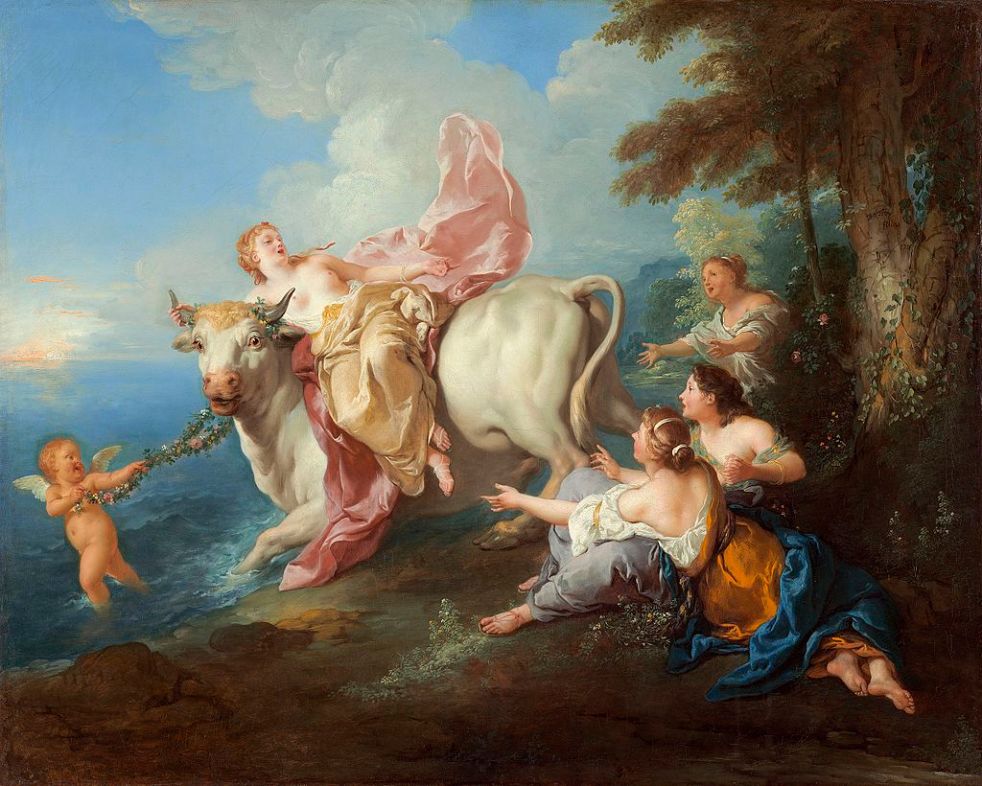
Europa is the home of difference and diversity, where new influences are not added to anything but clash and conflict with each other, fighting on the great Hegelian battleground of culture, creed and beliefs. The problem is of course, when this civic conflict of words, arguments, images and sounds becomes one of bullets and bayonets; it is then that we remember why we need a United Europa.
Europa, I think we can say with certainty however, is and long has been much more than a place on a map, contrary to Bismarck’s note in 1876 (‘Qui parle Europe a tort. Notion géographique’). Certainly, we can take Metternich’s foreshadowing of this comment in 1847, with the assertion that Italy was purely a geographic notion, as a sign that Germans are apt as misjudging political and social developments on this continent.