Part 1 of a three-part essay on the European Question and what Europe means, historically and today. Only by looking at the history of Europe as an idea can we properly contextualise the Europe we have today, and perhaps discern some insights from history on how to proceed with our project of unification.
The European Question is one which is far too absent from the contemporary discussions on the European Union and what we are trying to do with the integration project. Of course, we have the initial motivations; freedom from war, conflict, senseless violence in the name of national pride, and a more efficient, open and cooperative use of resources on our continent. Some hoped for an expansion of European industry to match the US. There were external motivations, those of the US chief among them, but these are less relevant with regards to the question of why we, as Europeans, are pursuing a political project which seems ever more difficult to continue, ever more meaningless and ever more doomed to failure.
As I began with, the questions over motivations for beginning and then struggling to continue this project rarely include the Question of Europe itself: what Europe is, and why it has bound Europeans together so significantly that the possibility of European unification was the solution turned to at the end of the Second World War. This is puzzling really, considering that clearly if you have a mind to integrate or unify an entity, then surely you require a firmly grounded idea of what that entity is. Perhaps it was because the European idea was so clear in the minds of the European elites who resolved to undertake the European Project, that they didn’t bother to define for foundational purposes. Certainly, in geographic terms, Monnet, Schuman and Hallstein deigned not to tell their successors where exactly they thought the borders of ‘Europe’ lay. Certainly, this question is one to be decided by politics than by any predetermined geographic feature.
I. Geographic Expression
Europa, I think we can say with confidence however, is and long has been much more than a place on a map, contrary to Bismarck’s note in 1876 (‘Qui parle Europe a tort. Notion géographique’). Certainly, we can take Metternich’s foreshadowing of this comment in 1847, with the assertion that Italy was purely a geographic notion, as a sign that Germans are apt as misjudging political and social developments on this continent. But more than this, mere geographic notions which are apparently significant enough to draw the attention of great statesmen such as these are rarely simply geographic, but much more. Just as Italy and Germany were before their unifications, and Poland was after its partition, Europa is a continent which was and remains bound together by its culture, its history, its commercial activity, and finally, its political and philosophical ideas. Each of these have long spilled over so-called borders and influenced those of their neighbouring peoples. This has crafted a cultural and social landscape very different from other parts of the world which have been divided by borders for so long. For the truth about Europe’s borders is that, for much of our history, they were only really noticed by the people living around them when a marauding army or militia could be seen crossing them, directed there by a self-serving elite in some distant capital. Only in the 19th Century, when nationalism began to grip this continent with the kind of fervour not seen since before the Reformation, did the borders come to mean something more.
However, we still have not begun to consider what Europe is beyond the geographical. It is a space which is perhaps unusually intertwined, yes, but as I said, Europe is more than this. I have been referring to Europe as an idea, precisely because in the spirit of Europe, alongside an unhealthy streak of self-congratulation, is the commitment to dissent, conflict, division and restlessness. I would not go as far to say that consensus is not European, but the overwhelming, crushing consensus that has permeated Europe for much of the past 25 years has been deeply un-European. For it has stripped Europe of its greatest asset – the restlessness, uncertainty and rebelliousness of its dissident minds. There is no official line in Europe; there are conflicting lines which are rejected by the many of us willing to think outside the ‘mainstream’. The correspondence and debate which this has produced has led to the most diverse writings, drawings, music, plays and tastes over centuries of rejection and assertion. Europe, then, is first and foremost a Republic of Letters. This republic is a strange one in many ways; the reasons why it formed, and how it has stayed together are unknown to most. Why we even think of Europe as an entity through which to conduct our conflict of ideas, emotions and beliefs requires more consideration. Of course, there was Rome, but then Rome only covered perhaps half the continent, dominating mainly Mediterranean Europe, as well as the far side of ‘Middle Earth‘. In the Graeco-Roman Era, Europe meant little; she was a tale told in Homer’s Iliad. Then came Christendom, but even this spread beyond what is understood to be Europe today; its head may have been in Rome, but its heart was surely in Jerusalem. And yet, under the banner of Roman Catholicism, European feudal society was beaten out across the continent, to parts which the authority of Imperial Rome never reached. Under the feudal warlords, linked together only by their common fear of god, Europe was realised into something tangible. And yet even then, there was division, for next to Rome sat the second head of Christendom; Byzantium, or Constantinopolis in the Greek.
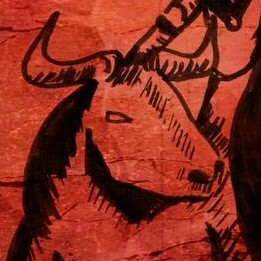
Europa, then, is a story, more than anything else. In many ways, this makes it like Britain, and Germany, and France and every other European nation, in that the founding myth has sustained a belief in a common patrie, something binding at least some of us, which goes deeper than spatial distance. The story of Europa and her kidnapping by the bovine form of Zeus (or Jupiter), the rape (or seduction) by a deity, and the birth of Minos who would found a mighty civilisation spreading across the turbulent continent to be named after his mother. And yet, this story has not be told like national stories, and for very different reasons. Europa was not a story of unification, nor pride, nor even reality. Even its details could not be agreed on. Europa was a story founded on division, on disagreement and uncertainty; on violence against its protagonist, who would never be found no matter how long her brothers looked for her. The search for Europa would be infinite; likewise, the search for clear meanings in this story would likewise be unending and without agreement. In this way, it serves as a terrible equivalent of national founding myths, which are clear and loaded from the beginning with a lesson to be learnt. For Europa, the search for meaning was certainly important, but don’t expect to find it. This we must never forget; the story of Europa is a story that will never be like the European nations. The story is one of discord, of controversy, of antagonism and of ambiguity. Despite the dissonance, there is a music to this; there is an ebb and flow, as all discussions and arguments have; like the concert is made up of several different sounds at once ringing out in different directions and coming together in a single crescendo. This is the Concert of Europe, and the concert is never the same as the individual players.
From such beginnings, Europe could only be place of animosity. Of course, this has become physical as well as verbal and written. The violent conflicts are a tragic, and hopefully bygone, consequence of such a divisive and transgressive civilisation. Despite having made the leap from story to reality, Europa cannot be spatially defined and territorially fixed; the European identity is not permanently tied to any geographical location, and hence its borders must be a political question, for the answer will not be found anywhere else. It is transcendent, as a belief in the fundamental positivity of conflict and difference. I do believe in the Union’s motto, ‘United in Diversity’. This is what unites Europe, not just the presence of diversity but the belief in its fundamental importance to a healthy, democratic society. Democracy thrives on debate, and for debate, there must be a difference in, a divergence and a conflict of opinion. If Europeanism were to encompass those who believe in the European idea, then this would be the belief they held; society requires diversity and healthy conflict to survive. Otherwise it will collapse into the unhealthy conflict that is violence and war. This has manifested in Europe’s discovery, as the late Zygmunt Bauman put it, of culture; specifically, the definition of culture as the activity performed by humans on the human world.
Culture is a battleground, an endless terrain of conflicting ideas and thoughts, interpretations and arguments on the Human Condition. Culture goes far beyond the traditions and habits of our society, especially here in Europe. It is the creation of an understanding for public use; the construction of a perspective on our world, which can be viewed by all. It is the flow of understanding between our different perspectives, the exchange of insights into life. Underlying culture is the idea that my contribution, or perhaps our contribution, is worth the consideration of our peers. It is capable of going into battle on the terrain of ideas, of beliefs, emotions, meanings and opinions. It will join the Concert, and add to its melody, and may even help to find the right path in the search for Europa; the search for a compelling take on our lives; on the meanings of it all. The stories, songs, pictures, drink, food, films, plays, scribblings, jokes, drawings, and all other manner of depictions we share with each other are the greatest expression of Europe as a civilisation, as a people and as an identity. To be European is to appreciate the everlasting melody of people.
II. The World of Yesterday
The above title is the name of a book by Stefan Zweig, Austrian author who wrote on the dying days of the period of turbulent peace separating the two halves of Europe’s civil war, and the continent’s descent into darkness. In the same year as the book’s publication, 1942, Zweig committed suicide – it is believed, in the realisation that the world he had known was lost. The world which he was now left with was stripped of all he held dear. While I have not lost all hope, I too look on modern Europe with a dawning sense that the transnationalism of culture and expression has become yesterday’s world; today’s transnationalism is much different. The Republic of Letters is lost to a republic, if it can be so named, of technocracy. Of course, Europe still has culture, but the spirit of transgression has faded, and in general cultural Europe has had to make room for something far more monolithic, uniform, cold and without the feeling that lay at the heart of European civilisation for much of the past thousand years. Perry Anderson noted in his writings on Europe that, whilst borders have been opened up, making way for further commerce and people to cross them, the kind of cross-border correspondence of ‘Sorel and Croce, Ortega and Husserl or Eliot, Curtius and Mannheim’ seem to have dried up on any subject beyond that of European integration, and even there we struggle to find interesting examples in abundance. It seems that under the charmes technocrates, the public sphere of Europe has been lulled to sleep.
What has Europe devolved into? The squabblings of bureaucrats and half-parliamentarians unable to agree on the most technical pieces of legislation. The line from 8 Horas goes ‘No vale la pena pensar ya lo hacen por tí en Bruselas’ (Don’t bother thinking – they do it for you in Brussels) and so with Brussels’ attempt to legislate everything through their directives, they have created a European atmosphere devoid of all European spirit; as a land of contention, transgression and diversity. Sure, the diversity from a national perspective has been allowed to remain, if not unintentionally promoted, by the European Project. But diversity of thought? Swallowed up in the insufferable consensus-making machine that is the web of European institutions. On the subject of integration itself, there has been too long a total absence of debate on how to view European integration and absence of thought on its purpose. As if integration is good for its own sake, much of these wider questions of Europe have been abandoned in favour of the most minute details of policy production and the technical role Europe plays in enforcing continent-wide regulatory policy. Meanwhile, the broader direction Europe is going in is considered, what – unimportant? Irrelevant perhaps? Regardless of which, the over-technical discussions into which this academic sludge gets is utterly irrelevant to the wider peoples of Europe, and just as useful to the course of their lives. In similar mindlessness, the technocrats continue tunnel-vision like on the fixed path they have been set, in this short-term and incrementalist path to an ever-closer-union which seems to have gotten no closer to completion among the peoples of Europe – the second part of that line in the Treaties. They will continue undeterred by their apparent failure, no doubt utterly unaware of its true extent. Nous travaillons actuellement pour L’Europe.
What did we hope to gain from such an approach to the political unification of our continent which was entirely devoid of any substance, conflict or dissent? The ‘permissive consensus’ as the 5 decades of integration without challenge from below were called has most certainly run its course. The idea that such a notion would be welcome is a stain on our European heritage – but perhaps after 1945 the thought of conflict was so repellent it was entirely cast from the European psyche, at least when it came to the subject of Europe itself. But this has inevitably led it to being considered an elitist project which has no correlation with the average European’s interest whatsoever. Once conducted by the political-classes for their own entertainment, it now has come to conflict, seemingly, with those average Europeans’ lives. This is of course false, but there was nothing substantial to resist the populist demagogues of the right-wing from creating such a narrative which was entirely convincing. Zweig, in lamenting the loss of die Welt von Gestern, recognises that the world that preceded the wars, in its bourgeois order and moderation and listlessness, was by no means perfect or even the most desirable world; in fact, its qualities may have been the very forces which led to the destruction of European civilisation as he knew it. Even if most Europeans haven’t turned from the project of integration, I would venture that the majority do not believe it is being undertaken in their interests or to their gain and that it fails to help them in their everyday lives entirely. If we are to rescue Europe from this pit it has fallen into, we will have to pursue it in an entirely different way from how it has been conducted over the past four decades at least.
Part 2 of this essay will follow shortly.
Photo Credits: The Abduction of Europa, by Jean-François de Troy, 1716

