
Society and social interaction is essential to individuals’ fully experiencing who we are. Without society, we would not come into contact with things and people who are different; difference being core to what makes us individual and unique. Yet by its nature, society also expects individuals to conform in some cases as part of the whole; explicitly with laws like ‘don’t steal’ or ‘don’t lie before a court’. The alternative are these things we call taboos.
The word taboo entered European culture in the 18th Century; in 1777 explorers James Cook and Georg Forster visited the island of Tonga where they learnt the meaning of the word. Tongans used “taboo” for “anything [that] is forbidden to be eaten, or made use of”. Tapu, in the original, today is used in Tonga for anything “sacred” or “holy”, in the sense of being restricted or protected by custom or law. In Germany, tabu had entered common parlance by the 20th Century, referring to things restricted by custom more so than law. They are the things that are implicitly excluded from society, rather than explicitly banned. They are unspoken of, unrecognised even. They are one of the tricks of human social interaction, and that is what makes them so mysterious.
Taboos emerge in moments when the issue at hand is relevant. Issues which produce conflict and, if made explicit, would break the implicit sense that society is a cohesive whole. Political correctness for example emerged at a time when European society was becoming more open: a diversification of identities within it, driven by multiculturalism and gender-equality. Previous stereotypes and prejudices about non-Europeans would’ve been a direct barrier for those people entering society. The idea that women were inferior in some inherent way would’ve clashed with the fact they had gained equal status in political and legal terms. Ignorant views on these people were therefore made taboo.
It is often forgotten why things become taboo. Because it is implicit and unspoken, the issue causing the problem seems to disappear, and with it, the thing we have made taboo. It goes unregistered after the problem disappears; once subjects have been made taboo, society tends to forget them. This forgetting reveals something essential in taboos, a truth about their nature. If we forget something, would we recognise it if reappeared?
A country’s taboos can reveal a lot about its culture and outlook. In Germany, being in debt is a taboo bound up with other parts of the German psyche. Self-sufficiency is very much considered a German virtue, something German society values and promotes. Even the German welfare-system operates on the idea that you pay into a pot while you are employed and then draw from it if you lose your job. It is understood as Versicherung – insurance, rather than tax redistribution.
 Productivity, industriousness – all of this is bound up with Max Weber’s ‘Protestant Ethic’ which he believed was central to why capitalism had been such a success in Germany. The country took care of itself, it did not rely on others. And it certainly did not rely on debt. Indebtedness makes you reliant on others, and reliance on others was a distinct concern for the country at the centre of Europe with few natural resources, low domestic demand and surrounded by potential threats. Fear of this reliance on the kindness of strangers led many German imperialists to draw up ideas for a Berlin-dominated Mitteleuropa which would draw on the peoples of central Europe to provide it with raw resources and which would buy German industrial goods. This idea warped into the belief that Germany could achieve ‘autarkic’ total self-sufficiency under National Socialism through conquest, triggering the Second World War.

The problem of German dependence was suppressed after the war. That through German industry, Germany remains a self-sufficient country, remains deeply ingrained in German society. Reliance on others is taboo. This forgets however that an economy based primarily on export-industries is of course heavily reliant on others. This fact has been suppressed in Germany particularly over the course of the eurozone crisis, as German politicians have called out southern debt-ridden countries for not being self-sufficient and productive enough, forgetting of course that its own economic success relied before 2010 on demand from those countries.
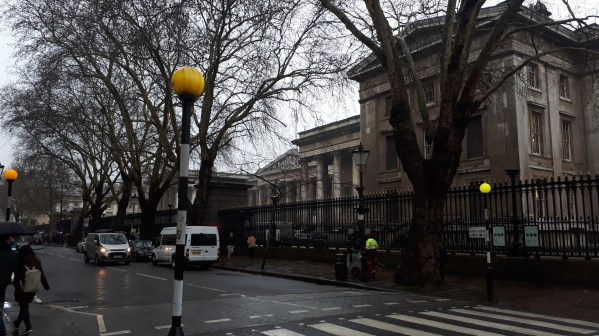
Britain has very different taboos. The reflexes of every-day conversation in England revolve around nuance, understatement, misdirection and hypocrisy. Directness is so avoided in Britain it could legitimately be considered a taboo. This has influenced how it wields power. Duplicity was at the heart of the divide et impera strategy it employed in building its empire during the 18th and 19th Centuries, most notably in India. London’s ‘British’ Museum is full of things stolen from the conquered peoples of the Empire. In the BBC docu-drama 37 Days, dealing with the 37 days leading up to the outbreak of the First World War, Kaiser Wilhelm II complains that “the English are liars. They believe in duplicity, not diplomacy. Legality, not lawfulness!” The nuances of the English language allowing such comparisons.
Today, we see Britain’s almost trained resistance to saying what it means in the Brexit negotiations. The EU-side has spent the last 2 and 1/2 years asking London what it wants, to no avail. It is often suspected with much derision that Britain entered this negotiation without a plan. “But of course!”, a Whitehall civil servant might reply. “A plan would simply have revealed we want.” Plans and directness restrict your room for manoeuvre in Britain’s mind. Honesty leaves you vulnerable. It isn’t ‘pragmatic’.

In a situation like leaving the EU, the limitations of this approach immediately make themselves manifest – as shown by the deadlock. This has led Britain to accuse the EU of being uncompromising, unfair and punitive. Dishonesty allows Britain to always accuse its opponents of misusing power. Yet the Northern Ireland conundrum reveals that Britain is the one with the really sinister intentions, with its callous disregard for the importance of the peace process there (which it began itself 20 years ago).
These two examples reveal the truth of taboos. In fact, what we say we do not accept is a very good indication of the things we do accept, and are very much part of society, but which we do not – or do not want – to recognise. Permitting them would cause a rupture in society, precisely because it requires them to be obscured. Taboos aren’t expelled from society, they are just hidden. They aren’t things we stop doing, we merely tell ourselves we’ve stopped. So they don’t reappear – they were simply there all along. Rather than confronting the issues that cause problems, instead shame is provoked by them; this itself is a sense of being resigned to the belief ‘this is what we are’. Shame makes us suppress things until they erupt to the surface. Political correctness today is very much like this – we knew people still held deep and ignorant prejudices, still held stereotypes, but they weren’t open about them. Now it has resurfaced with a vengeance and does threaten social cohesion.
One show that depicts taboos as they realise themselves in society is the TV drama by the same name – Taboo. It is entirely about breaking taboos. James Delaney is a man who has lost all interest in following the rules of British 19th Century society, having seen in at its most barbaric in the African slave trade which the East India Company still illicitly engages in.
Incestuous relationships, African rituals in Christian-European society, cannibalism, mental illness, defying the authority of the Crown and the East India Company – these are all the transgressions he commits in his quest to escape from a deeply corrupt society.
The presence of Africa in European society was hidden; from the slave trade which made European merchants wealthy, to the slave plantations in America from which cotton and sugar poured into the Old Continent. Bedlam, to which Delaney’s mother is committed before she died, is the psychiatric institute which gave its name to the idea of insanity or confusion. It is a monument to 19th Century taboo, representing the lack of understanding of mental health. Instead those who suffered were hidden away, isolated from society, and left to their internal torments.
A great scene from Taboo comes at the end of the series; Solomon Coop, the King’s private secretary – a mild, and polite-tempered man gliding through the gilded halls of the Prince Regent’s palace and Company offices up until now – is finally charged with the task of extracting the key information from Delaney that will destroy all his plans. Delaney is imprisoned in the Tower of London, hidden in the darkness from polite London society, where he is tortured. Of course, Coop himself cannot be present for this, so, civil methods exhausted, with a short gesture he leaves the room, and the torturer gets on the with brutal business.
These are the problems with taboos. They hide the ugliness of society that causes dissonance with society’s idea of itself; its sense it embodies the highest moral standards. There was no society more committed to this idea of civilisation built on hidden ugliness than Imperial Europe in the 19th Century. Unlikely coincidence that in this period, the term taboo gained public meaning. The Götterdämmerung of the two World Wars that followed were therefore all the more shocking, as the savagery that Europe had meted out across the globe in its conquests finally spilt forth across its once peaceful meadows. This is what happens when taboos are not addressed, when we hide what we don’t like about ourselves. It sits and festers until it bursts forth all the more violently.

Collective memory is bound up with taboo; things are chosen to be remembered which confirms society’s idea of itself, whilst those which do not are forgotten and buried. Germany has been committed to the idea of Vergangenheitsbewältigung since 1945, as a way of not allowing such monumental moral crimes to slip out of sight as taboos, only to reappear later. It of course hasn’t addressed them all. But the idea of confronting these faults, past and present, has become a part of German culture. It’s the sober attempt to deal with something rather than simply say “it’s bad” and shame it into hiding. European history is as complex and diverse as its manifold nations, and such ‘working through the past’ should have value to all of them. Because to forget or ignore a fault, to suppress a fact that is too problematic to be addressed, is to leave it for someone else to deal with later.

