
The Catalan regional parliament voted on Monday in favour of initiating a process that would lead to the independence of the region in north-eastern Spain. The vote was passed 72-63 in favour of begining the independence process, but despite this Madrid is still not accepting the rise of the independence movement in Catalonia as legitimate and is expected to hinder the Catalan premier, Artur Mas, at every turn.
In all honesty there are many reasons for the lack of cooperation from the Spanish Prime Minister, Mariano Rajoy. Firstly, the resolution passed on Monday was far more ‘anti-Spain’ than expected, with declarations that Catalonia no longer has to accept rulings from the Spanish Constitutional Court, as well as giving the Catalan government 30 days to pass laws that would set up a Catalan Tax authority and social welfare system. Chief among the problems causing discontent from Madrid is the fact whilst Catalan independence parties Popular Unity Candidacy and the larger, more moderate Junts pel Si gained an official parliamentary majority of 47.8%, that fails to qualify for a victory in a referendum. Not only does this produce a major challenge to the Catalan separatists’ legitimacy, it also has meant they are speeding up the independence process to keep the idea alive. Furthermore, the smaller Popular Unity Candidacy is a much more radical party of the left, who oppose NATO and EU membership, unlike Artur Mas’ party. Mas nevertheless requires their support for a majority in the regional parliament.
Madrid has taken the resolution incredibly badly however, requesting the resolution be annulled by the Constitutional Court, and, whilst the decision is being decided, the resolution has been officially suspended (not that I think this will stop the Catalans), and claimed there would be no fracture in Spain. This act is weighted in favour of Rajoy’s government, and Mas knows it, as the Spanish Constitution does not allow regions to break away from Spain. This is where things become tense, as the fact of the matter is, the Catalan Separatists, who have already declared Constitutional rulings as illiegitimate, may well press on with the independence process. This will certainly trigger a response from Madrid, even leader to the cutting of financial support to the region. The Constitutional Court also has the power to sanction leaders in Spain who act against it. However imposing those sanctions raises further questions, chief among those – who is going to enforce them? The Catalan police, who may well be loyal to the Catalan government? Or will Rajoy resort to using the national police, to do so? That could end very badly, for both Barcelona and Madrid, the latter of whom will look like occupiers to many Catalans, limiting the democratic will of the Catalan people. In terms of Spain as a whole, most are opposed to Catalan independence. The two sides have seen flares in tension in the past, and the separatist idea has risen tempers in Spain before, however I wonder whether this time will be different. It seems possible. Though Artur Mas has declared violence will not be used in the pursuit of independence, do all of his followers agree with him? And if so, how does he aim to achieve his goals?
Rise of Regionalism
Regionalism and Separatism is an issue that all national governments have had to face at some point in their existence. Most European powers will have some experience of this during the years of Imperialism. Closer to the present, Britain has had to face Irish independence at the beginning of the 20th Century, the impact of which was still being felt in 1998, and more recently, the referendum on Scottish Independence last year, which was only won by the Unionists by the skin of their teeth (55%-45%). Bavaria, a German state, also has a very independent frame of mind, however the problem there is smaller as Bavaria is actively represented in national politics by their own party, the CSU. However, splits have recently appeared in the CSU-CDU alliance. A friend from university tells me there is significant feeling in the French region of Brittany that has autonomous objectives, less so however than in Scotland or Catalonia. An interesting impact of the EU for people could well have been a weakening of the nation identity felt by many peoples in Europe, in and a reawakening of a more regional allegiance. For nationalists and the government, this poses a significant problem, and for eurosceptics, who put stock in their nation-states as the alternative to the supranational state. The fact is, these peoples certainly have a legitimate claim, if their people demand it.
Artur Mas and the Catalan separatists have claimed that any dialogue they have attempted to start with authorities in Madrid have been closed down very quickly by Unionists (and likely the Spanish government themself), so it’s unsurprising that they have decided to bypass Madrid altogether. Scotland had a more promising response from London in 2014, however the fact of the matter is, the question did not die. The hearts of the Scots were not won with the referendum, and the question will likely not go away. Nicola Sturgeon, the Scottish Premier, is just looking for justification for another referendum (in fact, a less than favourable EU vote will likely provide her it), and unless things change, then many people are going to wonder whether their vote the first time round was right.
Now, you may wonder where do I stand on the issue of independence, and where does Europe come in. The official narrative from Angela Merkel and Brussels is “no sides taken, but everyone involved must stand by the constitution”, which heavily rules in favour of Madrid. However, that does not mean that the rise of regionalism would not be beneficial to the European project. A weakening of nation loyalties may become a positive factor in people warming to the European idea. Of course there are parallels here with the British referendum on membership of the EU; if Britain wants to leave, then surely it should be able to. And yes, from the point of democracy, that would be correct. However that doesn’t make it the right move or the best move. And likewise if the Catalans, or the Scots, or any other separatist movement in Europe decided to leave the EU as well as their nation-state, then I’d say they had made the wrong move. All people are stronger together than apart. By separating yourself from everyone, the only people who gain, are the people in power who then have to discuss what they want for their country with less people. And even then, that’s a short term benefit compared to the long-term loss of losing influence in a bloc of 500 million people. The nation states are an important part of the puzzle in constructing supranational democracy in Europe. But if people don’t believe in them anymore, then that’s the way history goes. Separatism at the national level is not mutually exclusive with cooperation and unity at the international level.
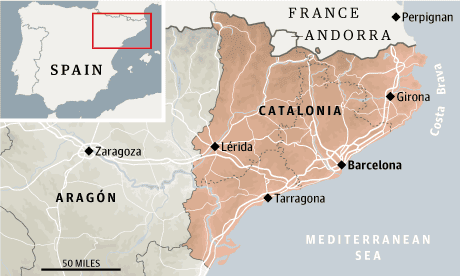
Sources: FT, BBC, France 24, Reuters

