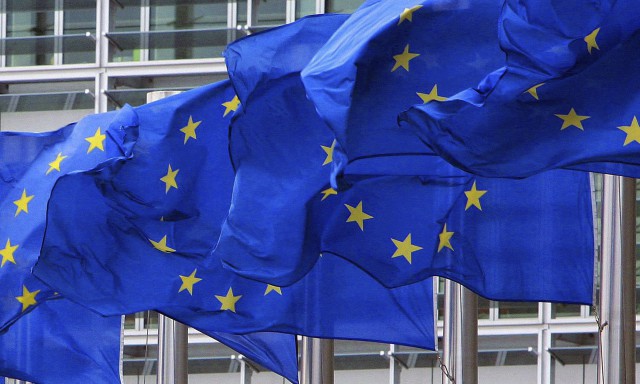
Updates on European news from over the weekend, including an article by the Polish President, developments in the Brexit debate, further fallout from the mass assaults in Cologne and the resignation of a major Greek banker as part of the ongoing reform process in Athens.
Poland is still European, writes Duda – The Polish President, Andrzej Duda, wrote and article in the FT on Sunday emphasising Poland’s remaining European credentials, along with continued support for democracy, plurality and international cooperation. Having begun the article stressing the fact his national conservative party Prawo i Sprawiedliwość (PiS) won the Polish elections in October quite convincingly, and that the Poles demanded such a government to come to power. The President explains that there is significant dissatisfaction among Poles for their Justice, education and health systems (saying there are polls which demonstrate this), as well as current threats to the European continent, including terrorism and the refugee crisis. Polish business in not the most flexible, there has been a brain-drain to other countries in the Union such as the UK and Ireland, and GDP growth has been uneven, which all needs to be rectified. However, President Duda then moved on to explaining that the recent protests, whilst opposed to his party’s government, are both unchallenged and perfectly legal. He also promotes the fact that political commentators can write whatever they want in regards to opinions on ideas and developments and that a pluralist press is still alive and well in Poland. Andrzej Duda praised Poland’s beneficial relationship with the EU, especially with Germany, going on to explain that friendly relations with Brussels and Berlin have been positive for Poland and should be preserved. The President wrote that in terms of the refugee crisis and the threat of terrorism in Europe, more must be done, and he intends to lead his country in support of fixing these issues. An important move would be strengthening the EU’s external borders. President Duda moved onto international relations in the final part of the article, underlining the threat of Russia and arguing that Europe needs to confront this threat head-on, and Europe should not balk at trying to restrict Russian aggression, saying “business interests should not prevail over European values”. He finally called for Europe to wake up to modern geopolitical realities, NATO to strengthen its presence on its eastern flank, and for countries to increase their defence spending. “Peace, security and community: together, we can cement these values as the 3 pillars of Europe’s future”. This news comes as S&P downgraded Poland’s credit rating on Friday to BBB+, and Prime Minister Beata Szydło prepares to enter the European Parliament. On Friday PM Szydło said “European membership is not a privilege, it is our right”, asserting that she will not bow to parliamentarians in Strasbourg.
UK prepares for Brexit referendum – Lord Lawson, former conservative minister and President of the anti-EU Conservatives for Britain movement, announced on Sunday that Vote Leave will be led by a “senior cabinet minister”. The news comes as the AFP reported that support for Brexit has increased to a 6-point lead, according to a poll by the Mail on Sunday, which excluded the 20% as yet undecided. Vote Leave has still not been confirmed by the Electoral Commission as the official leave campaign, which would guarantee its campaign public funding, the other contender being Leave.EU. Along with Cabinet Ministers Iain Duncan Smith (Work and Pensions) and Chris Grayling (Leader of the Commons), it is predicted that around 2/3 of Conservative MPs could campaign to leave the EU. The FT reported on Sunday that eurosceptic ministers’ decisions will hinge on what Prime Minister Cameron comes away from his negotiations with. One such Minister admitted to the FT that he didn’t like the idea of being on the same side as UKIP leader Nigel Farage; “every time he opens his mouth it makes me uncomfortable about being on the same side as him”. Farage has said he believes most Tory Ministers will put their ‘careers before their conscious’ and campaign to remain, saying “I’m beginning to see this referendum actually as being the people versus the politicians”. Nick Herbert on the other hand announced the launch of the pro-EU group Conservatives for Reform in Europe, saying “the key long-term challenges facing this country…would not be solved by leaving”. Michael Gove (Justice) and Nicky Morgan (Education) both are also believed to be on the remain side. Former Tory Chancellor Ken Clarke said he believes the Prime Minister will get his reforms and campaign to remain in the Union. Meanwhile, the other potential official leave campaign – Leave.EU – appears to be less popular in conservative circles. Led by Arron Banks, an insurance millionaire and friend of Nigel Farage, one Tory minister said of him “the best thing Arron could do with his millions is pay for Farage to go ojn a round-the-world cruise for a year”.
Piraeus Bank chief resigns – Anthinos Thomopoulos, CEO of Piraeus Bank in Greece, resigned on Friday after calls from government officials for his resignation. It is believed this is a sign of a more confrontational approach to foreign investors. A 3 day struggle ensued after government officials insisted that Thomopoulos step down, bearing in mind that Piraeus is considered the weakest of Greece’s 4 largest banks. Currently 1/2 of Piraeus’ loans are nonperforming. The stand off was mainly with American hedge fund Paulson & Co., which owns a 9% share of the bank. Paulson criticised government interference in the bank’s affairs, saying it had invested in the bank assuming Thomopoulos would remain in charge. It is believed the government demands were passed along by the Hellenic Financial Stability Fund, tasked with maintaining the viability of Greek Banks and having a 25% stake in Piraeus; the FT reported that this is a sign that international creditors intend to speed up the clean up of this troubled sector of the Greek economy. Currently, the Greek government is facing widespread popular resistance to its attempts to reform the Greek pension system, obligated by the next bailout agreement. The government blocked 2 major pieces of foreign investment in recent days, one by Canada’s Eldorado Gold, the other by China’s Cosco; an attempt to purchase the port of Piraeus. Furthermore it was particularly incensed – according to one banker who spoke to the FT – by Deutsche Bank’s suggestion to split Piraeus into ‘good’ and ‘bad’ parts and capitalise the good part with foreign funds. Thomopoulos oversaw during his time at the bank capital raising amounting to €4bn, and the acquisition of 6 smaller, failing Greek banks.
Germany still feeling the shocks of the Cologne assaults – German society is still coming to terms with the assaults in Cologne on New Year’s Eve, writes Stephan Wagstyl. The political debate over migration has been completely turned over in the light of the ever-increasing list of victims of the mass sexual assault committed on New Year’s Eve; according to Wagstyl it has broken all taboos in Germany over migration, with debates over public safety, Muslim integration and migrant crime on the agenda. The number of victims of the assaults has now reached around 700, the assaults now putting enormous pressure on Chancellor Angela Merkel over her current stance on immigration. The right-wing have been left feeling their previous fears that the refugees would struggle to integrate into German society have been reinforced, meanwhile the left are left disorientated, having previously been committed to the positives of an open and multicultural society. Policing has been the first area to receive political attention, after several reports of severe lack of policing on New Year’s Eve – one victim, Maria, told the FT that the first police officer she spoke to tried t send her away. There has also been a crackdown on crimes committed by foreigners, as proposals to ease the deportation of foreigners have been placed before the Bundestag. Despite the furore raised over whether Muslims who come from male dominated societies are more prone to rape, government statistics on the issue show that refugees are no more likely to commit crime than native Germans. Furthermore, sex-related crimes were less than 1% of all refugee-committed crime recorded. Arab refugees (Syrians, Iraqis and Afghans), were also far less crime-prone than Albanians or Kosovars. Forum, a police magazine, reported that only 5 in 1,111 Syrians came to police attention between January and November 2015 – these numbers were similar among Iraqis and Afghans, but higher among Moroccans and Algerians. The Central Council of Muslims, whilst admitting that young Muslims may see their new German freedoms as a pass to behave unacceptably, said that Muslims cannot be condemned en masse, emphasising that rape is a deadly sin in Islam. The culture is not the only factor, writes Wagstyl; it must also be considered that these young men are separated from their families, and wives, and are reckless and traumatised from their experiences in a war zone. Maria, herself a victim, said that you cannot generalise about immigrants – ultimately, people who commit crime are first of all, criminals.