
Poland’s recent passing of 2 laws affecting 2 of the major independent checks on government power have been the focus of the EU since late December. These involve a change to the operation of Poland’s Constitutional Tribunal requiring it to have a two-thirds majority to block government legislation, and a law sacking all the managers at Poland’s national TV and Radio broadcasters. The response from EU officials and politicians has been a wave a accusations that Warsaw is behaving undemocratically and the shift to more right-wing politics needs to be stopped. Last Wednesday, the EU moved to begin analysing the impact on PiS’ new legislation for its impact on the rule of law, which if it has been breached, could lead to warnings, supervision, sanctions and at worst, a suspension of Poland’s right to vote in EU affairs.
It was believed last by the FT that the Commission would likely back down from initiating anything major in its meeting on Wednesday. I remember reading the ‘Brussels Blog’ to find a wave of downplaying of the EU’s resolve in the face of challenges to its proclaimed values. The FT did have real reason for scepticism however; I mean, look at Hungary, which has completely managed to get away with its own restrictions on the media and judiciary. However the Commission did decide to initiate an investigation into Poland, instead of wait for the Council of Europe’s own verdict on the matter as the FT predicted it would. I think from that last sentence, it might be clear why the Commission has powered ahead with its tougher stance on Poland; ‘let’s wait and see what they do, because we can’t initiate any tough measures’ is not the message that Brussels wants to be sending to the member-states or the world right now, when it is swamped by the refugee crisis, rising worries about Brexit, the ongoing struggle to get the southern economies onto a stable footing, particularly Greece which looks set to put up a fight over reducing pensions further. The fact is, this appears to be something that the EU really can put its foot down over, and nip in the bud perhaps before it grows into another full crisis.
And frankly, it is a worry. Poland cannot join Hungary in tolerating a clearly more authoritarian regime, and the EU cannot make it appear that once you’re in, it doesn’t matter whether you’re democratic and pluralistic in your governance or not, we won’t step in. Because they certainly need to. Despite Prime Minister Beata Szydło’s assurances that Poland’s democracy is still healthy and prosperous, it has clearly received 2 potential fatal wounds. Guy Verhofstadt told Politico “It is clear that if an accession agreement was to be sought now, it would fail”. There can be no doubting this, because they’ve gone against European values. The Commission calls it undermining the rule of law, that being essential to modern democracy means PiS’ actions are an attack on what binds European countries into this Union. Warsaw has attacked the independence of 2 major institutions in democracy; the free media and the judiciary, the one which holds government to account, the other that has hard powers to limit the actions of government. PiS has clearly showed disdain for both ideas; by sacking the independent managers and editors, and replacing them with their own candidates, is a clear attempt to bring perhaps the most far reaching aspect on the media – the national public broadcasters – under the influence of the government. As if sacking the managers wasn’t enough, a second bill is designed to remove all journalists, editors, directors and producers in the national TV broadcaster – TVP – the polish news agency PAP, Polish radio and 17 local channels. How can this be called anything but outrageous. I wasn’t around at the time when Hungary enacted similar reforms to its press, however the fact that such bills have been allowed to be passed in the EU before are unbelievable. PiS have called it correcting the media as so to stop criticism of the government and promote national a patriotic values. I’ve never seen such a blatant expression of fascist values in my life from a western government. Having said that, Politico did a report in which they questioned a series of politicians, academics and the like on the developments in Poland, in which historian Adam Zamoyski said this is more of a throw back to Soviet style politics than right-wing ones. But here again I point to fascism and I mean it, because anyone who’s studied the Third Reich knows that the Nazis policies were littered with socialist ideas, from huge state intervention to a fraternal bond of the people. What separates it from Stalinist-style communism is the emphasis on national identity.
And the same can be said of the neutering of the Constitutional Tribunal. Viktor Orbán followed the same path of inhibiting the powers and thus independence of the Constitutional Court before moving onto other parts of the regime. It’s clear, from the act of increasing the number of sitting members of the Tribunal, to increasing the required majority threshold to replacing the previous government’s nominees with their own, that the moves are entirely designed to allow PiS to roughshod over democratic principles. According to Witold Waszczykowski, these measures are designed to ‘cure’ Poland of ’25 years of liberal indoctrination’. Under this government, vegetarians and cyclists have been attacked as un-Polish. I thought these guys were supposed to be Poland’s legitimate alternative? They’re children.
I promise you, Poland did not vote for this. Zamoyski said in the Politico article that in reality, the electoral win for PiS was more a desire for change and an electorate tired of the Civic Platform (PO) and its arrogance. I’m inclined to agree with him, as is Guy Verhofstadt, and the thousands who have taken to the streets of Warsaw and Kraków, protesting the government’s authoritarian measures. You know, one of the most oft-repeated things that many who lived through the Nazi dictatorship in Germany said was ‘we didn’t think they would do it’. Didn’t think they’d remove press freedom, or end the rule of law, or remove democratic representation. And certainly, few could have predicted the mass genocide. I’m not equating Law & Justice with Nazis or Jarosław Kaczyński with Hitler. But I am saying that Reinhard Veser is putting it lightly when he said in the FAZ earlier this month “in Poland’s national conservative governing party, there are many serious conservatives”. Indeed, there are many of the Polish electorate who are the same, and though Poland isn’t ‘accountable to European values’ as Polish President Duda’s spokesman, Marek Magierowski said in Politico (though I’d say they are considering they chose to join the Union on the basis of that shared belief), they certainly are accountable to the Polish electorate, and they do not want this, even if they gave them a majority in the Sejm. Interestingly, Veser’s article in the FAZ was titled Ohne Debatte (without debate) – and that’s certainly true, there’s no debate. They’ve violated the rule of law, and if the Polish people call, Europe needs to be ready to help them save their democracy.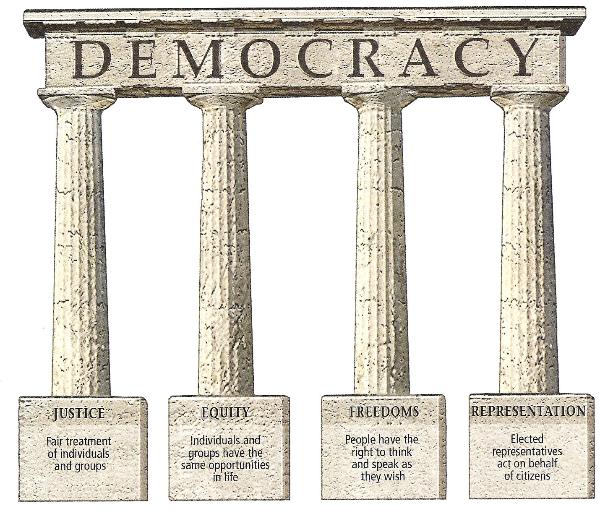
Sources: FAZ, FT, Politico Europe, EUObserver

