
Europe, as many of us know, is a very complex entity. It defies the standard rationale of determining the role and place of institutions. Normally, international institutions are independent, and without any power; they usually make up international organisations. On the other hand, national institutions do have power and authority; they form part of the government of a state. In response to clarify some of the contradictions of the Union, several theories and conceptions of it have been put forward, which tend to fall into two broad camps. We have on the one hand a ‘Europe of the citizens’; a Union which is ultimately controlled by and responsible to the people of Europe. This is counter-posed by a ‘Europe of the states’, a phrase coined by French General and President Charles de Gaulle, and suggesting whatever Europe is, it will be controlled and defined by the nation-states.
Today however, the Union has rejected even these two broad definitions. On the one hand, the shot at creating a Europe of the citizens was ended in 2005 with the rejection of the Constitutional Treaty. This is a complex episode, with majorities in several states in favour of a Constitution at the beginning of the process. However, by the end, once it was clear that this would not be a real constitution but an international treaty, and one not written in the interests of the citizens, the people of France and the Netherlands ended it. You can argue that Europe was not then ready for a constitution of its own anyway; regardless, by the end of 2005, any potential for moving towards a Europe of the citizens in a clear and organised manner had been killed.
A Europe of the states has often been the preference of many observers of the Union, as it does seem to explain developments in Europe and the course of the European Project more adequately. De Gaulle’s argument himself was that there is no ‘Europe’ which can exist without the nation-states; all of the continent’s achievements, great and otherwise, have come from the states, and nothing substantial will be achieved without them. More theoretical perspectives on this front have argued that European integration progresses only with the states’ consent, they are only involved because it is mutually beneficial to all the participants, and Europe is simply a tool for the European nations engaged in the Union to more effectively achieve their domestic objectives.
This perspective however also seems to have faltered. With the eurozone having fallen so deeply into crisis, the tensions and failings of the current path of the European Project suggest that this is not in many of the nation-states’ interests at all, and that several decisions have been made about Europe’s path without all the states’ express consent. If you take the 2013 Fiscal Compact and its impact on the economic governance of the eurozone, you see it is clear that there were a group of states behind it (to some degree or other) and a group with whose interests this treaty expressly did not align. We understand this today as the north-south divide in the eurozone, entrenched with the Sparpolitik agenda most strongly enforced by Germany and the Merkel Chancellery, from which the idea of the Fiscal Compact emerged. This has led to Greece being turned into a protectorate state, having to implement a foreign Diktat drawn up by a Troika of the IMF, the ECB and the Commission, with the backing of a Germany which has adopted in the words of Perry Anderson a very Wilhelmine brand of diplomacy. Italy meanwhile has not seen growth in over 15 years and yet remains bound to the euro. Spain, Portugal, Ireland and Cyprus have all had austerian Sparpolitik forced upon them in some way as well. You cannot say that this is in any of these states’ interests, nor that the ‘progress’ European integration has made has been with their consent and certainly not with their peoples’ consent. The Europe of the States lies dead in the water as well.
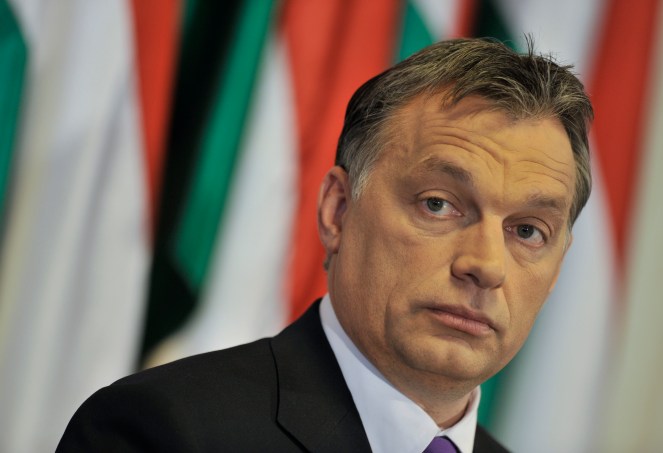
An article in the Financial Times really shed a light for me on what we have come to in Europe today. Right now, we have a ‘Union of national capitals’, a concept Viktor Orbán is pushing in his drive to transform Europe. What he doesn’t seem to realise is that in principle, it’s already here. National capitals are the last bastions of support for the kind of Europe we have now, stripped of all its vision, its optimism, its idealism and its promise. The migrant deal with Turkey, completely forlorn of all moral principle, is something which could only have come out of the Realpolitik-thinking of the 19th Century. The eurozone is now an institutionalisation of the dominance of central, ‘teutonic’ Europe over the Mediterranean states. We have no common refugee system because the Visegrád bloc resists accepting part of the refugee burden since it means they do not have to confront Eastern populations who are unused to influxes of people who do not look like them, meanwhile border fences and controls scar the continent once more. The complete failure to stabilise the situation in Ukraine. All national governments right now are seemingly concerned only with getting re-elected, and are not prepared to take the plunge of trying to orchestrate an opinion-shift in their electorates; in Germany, abandoning austerity, in France, trying desperately to maintain an illusion of a leadership role in the Union, in Hungary and Poland, accepting refugees.
Perhaps Britain is a perfect example of this. In June this year, the Europe of national capitals finally met an object which it could not find some unsavoury deal to get past. Britain’s Conservative government (or half of it at least) conducted a Remain campaign which had zero to no chance of succeeding. Relying on unreasonably certain economic predictions, assumptions that the electorate would make ‘the common sense decision’ and in general ignoring most concerns of Britons beyond the capital, David Cameron believed he had the British people in a bind they could not escape. He, and the rest of the official Remain campaign, likely believed these arguments would work; after all, everyone in the capital were concerned with the impact on the financial sector, what would happen to FDI trends, how we would rebuild relations with our trading partners and so on. In maintaining the edifice they had protected for decades now, the British national capital had no idea how to defend it from the very people on whom their power depended. The fine balance between advancing the interests of British multi-nationals through free-trade abroad and fomenting euroscepticism through migrant fear-mongering and austerity at home finally came crashing down.
Perhaps the most significant problem posed by the ‘Union of national capitals’ is that it places us awkwardly in between the Europe of the states and the Europe of citizens. All the problems this presents us with, the Europe of national capitals ignores; distant and illegitimate sources of authority, failed and crumbling power structures, disregard of the European peoples’ concerns and the utter failure of the national capitals’ attempts supposedly to allay the crises we have found ourselves in. Such a Europe neither transcends the nation-state nor serves it. It only reinforces the unholy alliance of interests which have coalesced around its infrastructure – unbridled international financial capital, teutonic austerity & budget discipline, unaccountable technocracy. These are the powerful interests, focused in national capitals, which are happy with and have done their utmost to maintain this in-between state of affairs. However, it cannot last much longer. Nationalism is rising across the continent, and its advance is so far unstoppable. They will likely not opt even for a Europe of the states but simply for the nation-states, with all its prestige politics and protectionism.
Of the two ‘European’ options, I have always been in favour of the Europe of the citizens, and all it entails for the revolutionising of Europe’s social and political circumstances. However, if we as a continent are unwilling to take that step, then we must choose the Europe of states, dismantle Europe’s supranational institutions, return powers entirely to national governments, and create a framework for cooperation between them which would stop us from falling into a postmodern 1930s. Because that is the prospect we face if we continue down the path we are on now. Europe must make a choice about what it wants. And this choice cannot be made solely in the national capitals.
Sources: FT

