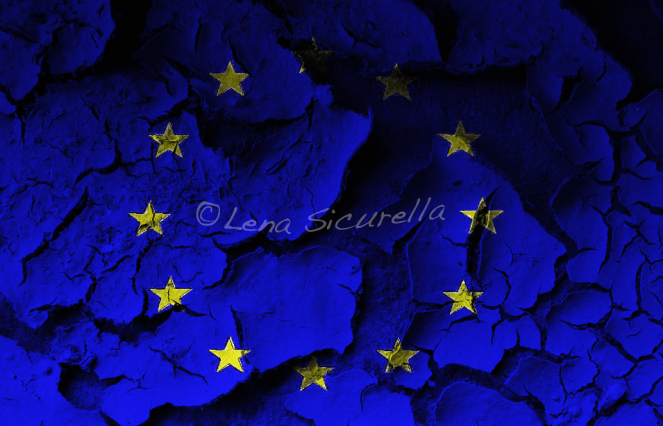
On 1st March 2017, Commission President Juncker released the long-awaited White Paper produced by the European Commission, to initiate a debate which will arrive at a key milestone at the 25th March Rome Summit. The White Paper on the Future of Europe: Reflections and scenarios for the EU27 by 2025, is perhaps the most open admission by the political classes of the continent that we are at a crossroads in Europe; we have long since reached one of those decisive moments in history where we have to make decisions about the direction our societies are going to take, what are the forces which will be driving them and what will be the political context around them. Our commitment to a united Europe is chief among those questions. It is the defining political question of our time.
Naturally, Juncker’s white paper presupposes the answer to that first of important questions is yes, we are committed to Europe as a united continent (aside from the British), and we want to push forward to make this Union of ours work, having seen it run into increasing trouble over the past 7 or so (some might say even 12) years. Juncker notes the nature of the decision we are looking to make
“But Rome must also be the start of a new chapter. There are important challenges ahead of us…A united Europe at 27 needs to shape its own destiny and carve out a vision for its own future.”
With this in mind, the white paper lays out 5 proposals as potential paths for Europe as we approach the end of the decade. Most commentators have noted that the first two are relatively unlikely to grab anyone’s attention – continuing on as before or focusing exclusively on the Single Market. Anyone who’s been paying attention knows that the EU’s days as things stand now are numbered. Meanwhile focusing solely on the Single Market would re-brand such a collapse as intentional, with’ever-closer-union’ being added to the footnotes of history.
So immediately our options are reduced to the last three, and here is where the contention sets in. Guy Verhofstadt, leader of the ALDE party in Brussels, noted in the debate in response to the publication of the white paper that even the third option was really a non-starter; something that President Juncker and he agree on. However this is perhaps due to a lack of understanding; whilst this option initially seems to be going ahead with the opt-outs, opt-ins, earmarks, exemptions, rebates, passarelles, delayed obligations and enhanced cooperations, in fact it is the route to a multi-speed, multiple tier Europe. This is the option Wolfgang Münchau recently opted for in an article for the FT. In it he writes
“A few days before last week’s summit, the leaders of France, Germany, Italy and Spain met to express a preference for a multi-speed Europe, on lines similar to the variable geometry some of my friends favoured two decades ago. They arrived at this conclusion through a process of elimination. A federal Europe of 27 member states is out of the question because that would require deep changes to the European treaties that would stand no chance of being approved by all. Doing nothing is not much of an option either. So there is no alternative to variable geometry.”
In the final analysis, this is most likely the correct answer to the situation. The definition Münchau uses for multi-speed – a ‘structure with a reasonably integrated core, surrounded by a less integrated outer layer’ – is even one which the federalist Verhofstadt can get behind. I cannot see a Europe of 27 states peacefully progressing anywhere without a divergence in the levels of integration. If we are serious about arresting Europe’s disintegration into a patchwork of competing nation-states again, then we must accept, as Münchau says, some degree of disintegration by those least committed to the joint project. This does not mean the kind of monolithic, institutional mess we have now, a Europe à la carte serving no one and lamented by all; it means two clear tiers of membership with clearly defined relationships with the European Project – one transactional, in which you are associated with the Union, and one of solidarity, in which you are a part of the Union.
However, this is by no means the end of the story. Unfortunately, despite what many of us might tell ourselves, saving the dream of a united Europe can no longer be a matter of institutional reform, or perhaps even more cynically, reconfiguration. As Martin Sandbu points out in his analysis of the situation on 2nd March, a lot of the people in Brussels seem to have accepted the Commission’s angle on the crisis, which “swallows whole the premise that the EU’s challenge is primarily institutional”. Instead, Sandbu suggests that perhaps, “the issue is rather the policies that EU leaders have seen fit to pursue”. When it comes to the institutions, Sandbu is on the same page effectively as Münchau and Verhofstadt. However he raises an issue which everyone else seems to have forgotten as the debate has continued; that what has been causing most of the consternation, rise in euroscepticism and outright nationalism in Europe is not the failures of its institutions but the policies which Europe has saw fit to actually implement.
Sandbu comes at the whole situation from the perspective of an economist, hence in his final analysis the source of the problem is the economic hardship imposed upon much of periphery (and the poor in Europe’s core) as a result of the deflationary, low growth and low investment policies – austerian Sparpolitik has been the order of the day since the Sovereign Debt Crisis broke in 2010. The solution would be to relax the iron grip of austerity and promote growth; this is on the agenda of much of southern Europe’s left-wing populist parties, including Podemos and once upon a time, SYRIZA. Unfortunately in much of Europe today we are living in a world where meaningful alternatives tend to be only promoted by the radical extremes. This has begun to change however, with the decision by the French Parti Socialiste to nominate Benoît Hamon as its presidential candidate for this year’s election, and the election in 2015 & 2016 of Jeremy Corbyn to the leadership of the British Labour Party. Sandbu suggests that it is now time to bring this kind of discourse to the European level.
This debate between institutional reform and a change in political course underlies a broader problem of European ‘politics’. When reading Juncker’s white paper, and hearing these discussions over institutional reform, you get the sense that Europe still treats itself as an immensely technocratic enterprise. This is a core part of the problem of peoples waning faith in the common project. Seeing politics is what really engages people. Policy is political, and yet it is precisely what the Commission has chosen to avoid. This is unfortunate; Gianni Pittella, leader of the Socialists in the Parliament, made the point that the Commission is a political body before it is a bureaucratic one. In the past, Jacques Delors and Walter Hallstein recognised this and wielded it to their advantage. Today, Juncker has made the cautious decision to step back from the political discussions and leave them to the Council. That was a mistake. Having watched the Council deal with this crisis since 2010, it should have become clear to all that they perhaps do not even have the imagination to reinvigorate the European Project successfully. When taken all together, it seems that everyone has abdicated their duty. We cannot make progress without policy, and whilst the Council policy-decisions over the past 7 years have been abysmal, the Commission and parliament do not even have the power to make any policy of any kind of effect on society at the macro-level.
It is here that I would like to turn attention to Paul Mason and his contribution – Option Six. With all five initial options proposed by the Commission ruled out, Mason wants to introduce the concept of ‘A Europe Of Democracy And Social Justice’ into the discussion. Mason takes the position of Sandbu in many ways; when taken altogether European society has been overwhelmed by a failure of the Union to actually solve the crisis by acting where it needs to. This is both political and structural; Europe relies on the neoliberal understanding of economics and society, an understanding which has collapsed over the past 9 years since the 2008 crash. This understanding has informed both its institutional make-up and its choice of policies, both by the Commission and in the Council. The mix of austerity and deregulation imposed and Greece, Portugal and other southern states as well as Ireland comes straight out of the neoliberal playbook. Unlike Sandbu, this undemocratic response to the crisis is not merely a matter of choice or mistakes, but structurally ingrained in the way the Union operates. The European Central Bank is a good example of this: its charter states in good neoliberal tradition that it should act entirely independently on the assumption that the role of the ECB is technocratic, and yet it has had to take increasingly political decisions as the crisis has progressed, precisely because the architecture of the eurozone is not built for the kind of crises it has faced since 2010. Since the ECB is not supposed to take political decisions, the course it has opted for has been one of self-preservation and defence of the eurozone as is, within its confined structural architecture. As tensions in the eurozone have mounted, this has led to ever more authoritarian decisions, including in the last instance closing the Greek banks without any seeming reason to – other than undermining the Greek position and thus preserving the whole crumbling edifice as it currently stands. Europe as it stands, informed by neoliberalism, doesn’t believe it has to promote social justice, and so it is not institutionally equipped to perform such an undertaking.
For Europe to operate democratically and serve social justice, as many on the left want it to, Mason argues that an entire institutional reformation is required. It will require a new Treaty, revising the old ones and introducing concepts which previous ones never mentioned, including the objective to “adopt uniform workplace rights, partnership arrangements with trade unions and common minimum standards of welfare provision”. To bring this about Mason concedes that a multi-speed Europe may be necessary. Here we are then back at the institutional reform vs. policy change dilemma. Are the European peoples willing to engage in an institutional overhaul? Do they believe it is worth it considering how little Europe seems to provide for them now? In the same vein as Mason is the European New Deal, proposed by DiEM25 (Democracy in Europe Movement 2025, conveniently the same deadline as Juncker’s white paper used), and spearheaded by among others Yanis Varoufakis. They accept that institutional change is necessary in Europe to bring it in line with the values of social justice and democracy, and it is through embracing these values that Europeans will be won around to Europe once more and the crisis will be solved. However, they also recognise that won’t happen until Europe proves it can actually deal with the ills afflicting Europe, chief among them an ailing economy.
The good news is that there are several policies which can be legally implemented by Europe today, without any treaty changes and with meaningful effects. The question is are we willing to take the radical steps to save Europe, or will try and fudge things, along the lines of ‘why do today what can be put off until tomorrow?’ Many of us students will recognise the problem of this strategy – at some point tomorrow becomes deadline day. What is clear is that the survival of Europe is at stake, and more are becoming aware of this by the day. There is only so much time left, much at stake, and much more to do.